Believe it or not, Christmas 2025 is fast approaching. For many, the holiday season is synonymous with traditional markets and the comfort of a hot cup of mulled wine. However, there is a genuine scientific reason why you should never let your Glühwein boil, and it goes beyond simple culinary advice.
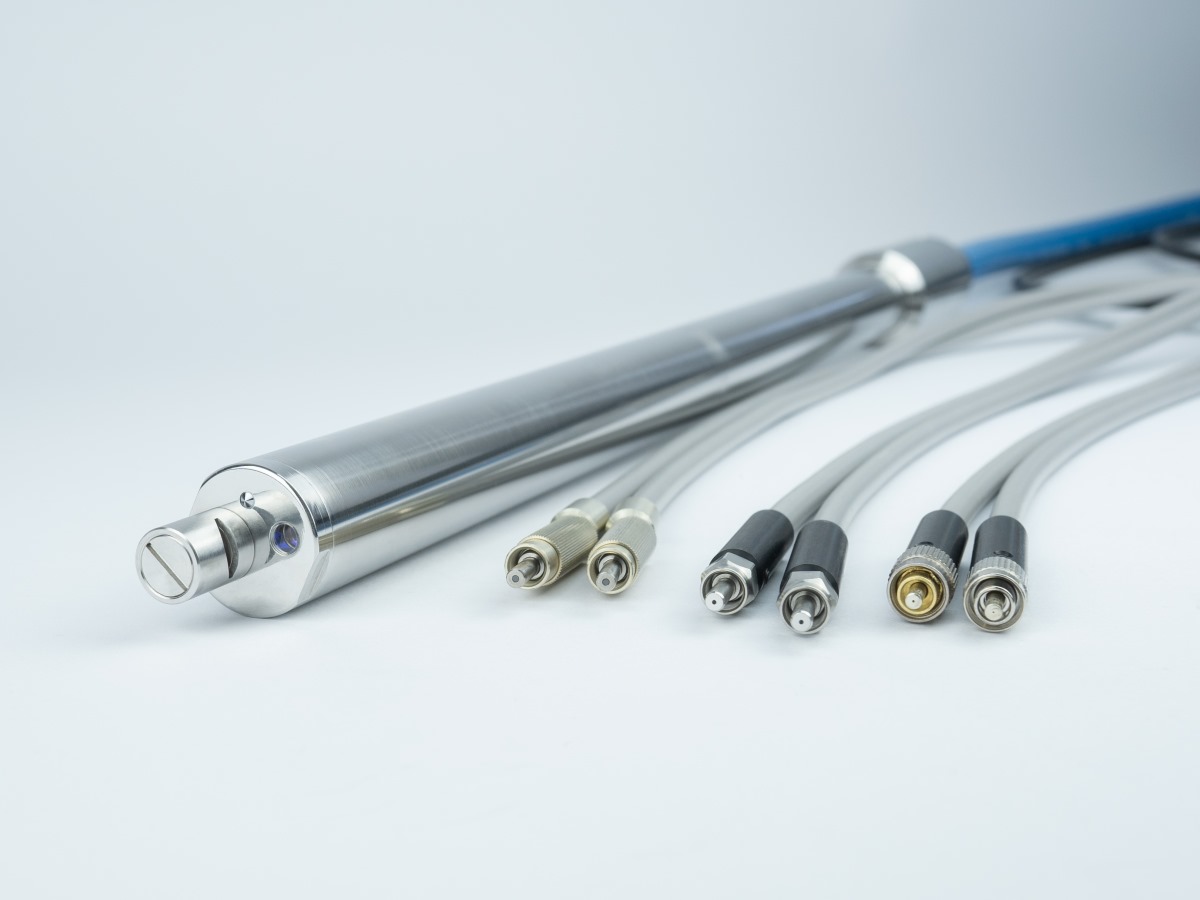
In our latest Application Note, we decided to take a festive approach to Process Analytics. Using our fiber-based MIR spectroscopy probes , we conducted an experiment to observe exactly what happens chemically when mulled wine is heated, providing a clear visual representation of why temperature control is critical.
The Secret to the Perfect Cup
Our experiment highlighted two distinct outcomes based on temperature regulation:
1. The Sweet Spot (72°C – 73°C) This is not an arbitrary range. According to gastronomy rules, the optimal drinking temperature for mulled wine sits between 72°C and 73°C. At this specific thermal point, the aromas develop most effectively, yet the liquid remains just below the boiling point of ethanol. This ensures the flavor profile is maximized without losing the alcohol content that defines the beverage.
2. The Overheated Result (90°C) To demonstrate the risks of overheating, we pushed the temperature of the sample up to 90°C and maintained it for approximately two hours. Continuous monitoring with our Diamond ATR fiber optic probe revealed that the characteristic spectral peaks of ethanol completely vanished. By the end of the experiment, the spectral signature of the "wine" had transformed to resemble that of simple grape juice, dominated entirely by sugar compounds rather than alcohol.
Real-Time Monitoring in Action
While this serves as a lighthearted seasonal example, it perfectly demonstrates the serious capabilities of fiber-coupled MIR spectroscopy. The ability to monitor thermally induced chemical changes in real-time is a powerful tool for process control.
Whether ensuring the quality of a holiday beverage or managing critical parameters in pharmaceutical and bio-fermentation processes, our Diamond ATR fiber optic probes provide the necessary in situ analysis to maintain product integrity.
We invite you to read the full details of this experiment and view the resulting spectral data in our new Application Note.
Download the Application Note below: