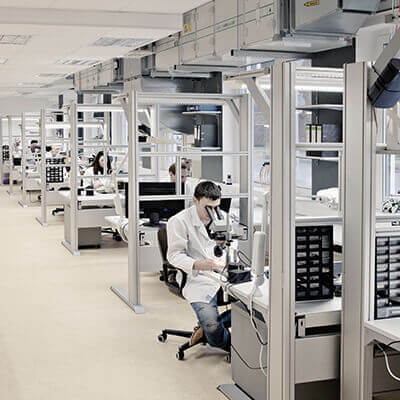
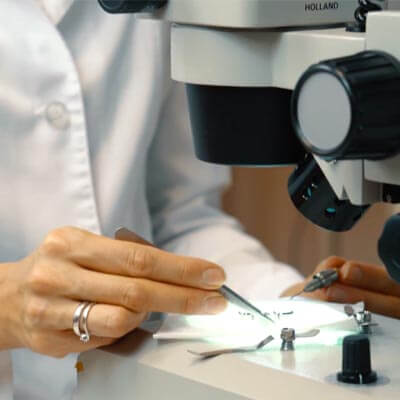
Behind every specialty optical fiber we manufacture and ship at art photonics, there is a dedicated team committed to getting every detail exactly right. Today, we are delighted to shine a spotlight on one of the essential people behind our production lines: Nicole, a Production Employee at art photonics. Recently marking her 5-year work anniversary […]
During active pharmaceutical ingredient (API) crystallization and drying, comprehensive process understanding demands simultaneous insight into chemical composition and solid-state structure. Operators routinely track two distinct parameters in real time: residual solvent or moisture content, and crystal polymorphism. Historically, monitoring both attributes in situ presented a practical instrumentation bottleneck. Near-infrared (NIR) spectroscopy excels at quantifying water […]
art photonics will be represented at analytica China 2026 in Shanghai from 16 to 18 November 2026. Together with our local distribution partner, UniqueRay Technologies Limited (Uray), we will be presenting our specialty fiber-optic solutions for inline Process Analytical Technology (PAT) and laboratory spectroscopy at Booth # E6.6920. At art photonics, we design and manufacture […]
art photonics GmbH is currently exhibiting at the China International Optoelectronic Exposition (CIOE) 2026 in Shenzhen. From September 9-11, we are represented at this premier industry event by our partner, UniqueRay Technologies Limited. Industry professionals are invited to visit Stand 8B16 to review our advanced portfolio of specialty fiber optic solutions. UniqueRay is showcasing our […]
art photonics GmbH, founded in Berlin in September 1998, is one of the worldwide leaders in development and production of specialty fiber products for a broad spectrum from 300 nm to 16 µm. Unique technologies of Polycrystalline Mid InfraRed (PIR-) fibers and Metal coated Silica fibers are used for assembly of various spectroscopy probes for medical diagnostics and industrial process control, in volume production of fiber for medical and industrial lasers, for different fiber bundles, etc. Since January 2024 art photonics GmbH is a member of NYNOMIC GROUP.
Raman vs. Mid-IR ATR Spectroscopy for In-Line Reaction Monitoring: Technical Note
Posted on:
9 July 2026
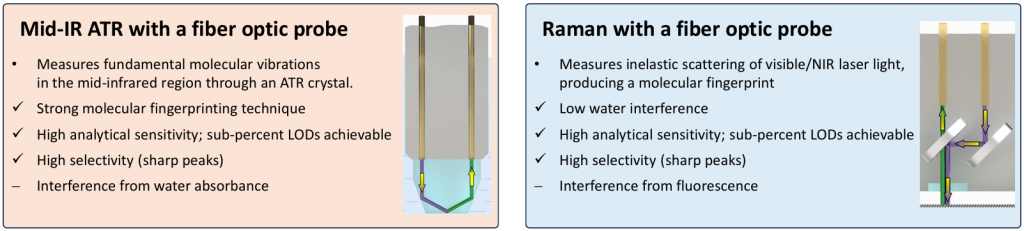
Mid-infrared (mid-IR) and Raman techniques are complementary vibrational spectroscopy methods utilized extensively in Process Analytical Technology (PAT). While both probe molecular vibrations, they rely on fundamentally different optical effects: mid-IR ATR detects the absorption of mid-IR radiation, whereas Raman relies on the inelastic scattering of visible or near-infrared (NIR) laser light.
For system integration in continuous manufacturing or batch processing, selecting the correct fiber-optic probe requires evaluating the chemical matrix, physical media constraints, and target molecular species.
Mid-IR ATR Spectroscopy: Ideal for Polar Bonds Detection
Mid-IR absorption requires a fundamental vibration that induces a change in the molecule's dipole moment. Consequently, mid-IR ATR yields high analytical sensitivity for polar bonds, producing strong, well-resolved absorption bands for functional groups such as C=O, O-H, N-H, and C-O.
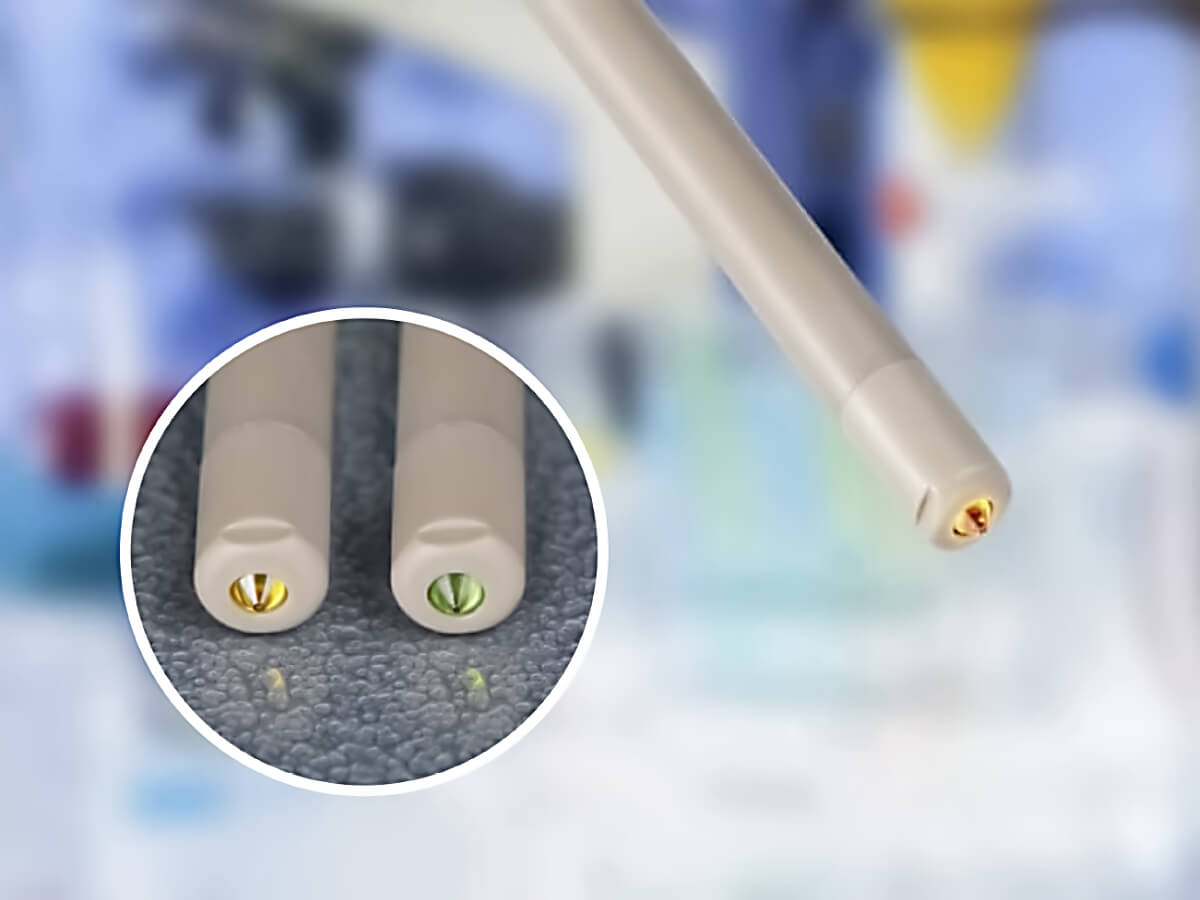
In a fiber-optic Attenuated Total Reflection (ATR) probe, radiation propagates through specialty optical fibers to an ATR crystal in direct contact with the reaction medium. Internal reflection within the crystal generates an evanescent field that decays exponentially, limiting the penetration depth to approximately 0.5 - 2 µm into the sample.
Technical Parameters & System Integration:
Media Compatibility: Because the measurement is confined to the immediate 0.5 - 2 µm contact layer, the technique is robust in turbid, highly scattering, bubbly, or particle-laden media. Optical contact with the crystal must be maintained.
Reaction Tracking: Mid-IR effectively tracks functional-group chemistry in real time, yielding direct kinetic data for esterification, hydrolysis, oxidation/reduction, amide/peptide formation, and polymerization.
Water Interference: Aqueous matrices present heavy absorbance interference, though the inherently short pathlength of the ATR crystal makes measurement in aqueous media practical.
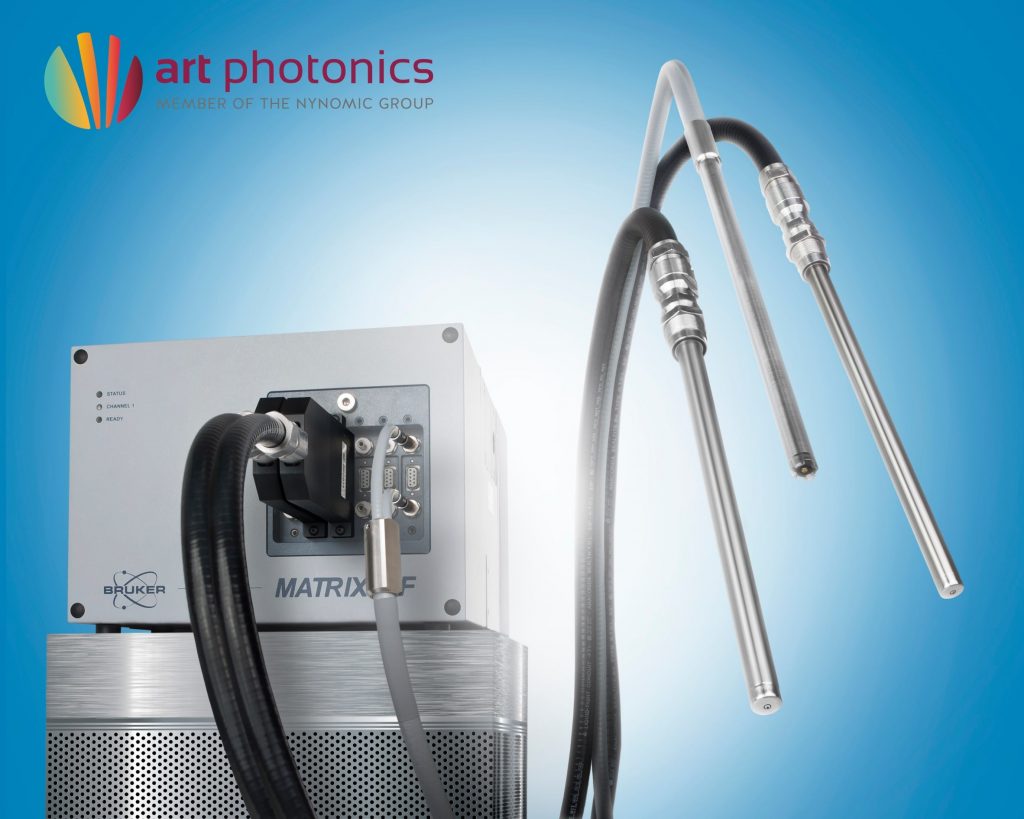
Transmission Limits: Fiber attenuation limits cable lengths to 2-3 m when utilizing standard FTIR spectrometers. Lengths can be extended up to 10 m when integrated with high-power quantum cascade laser (QCL) sources or dual-comb spectrometers.
Spectral Range: Configurations capture the fingerprint region (600-3100 cm⁻¹) as well as high-wavenumber regions (1550-9000 cm⁻¹), depending on the specific ATR crystal and fiber material.
Raman Spectroscopy: Molecule Polarizability
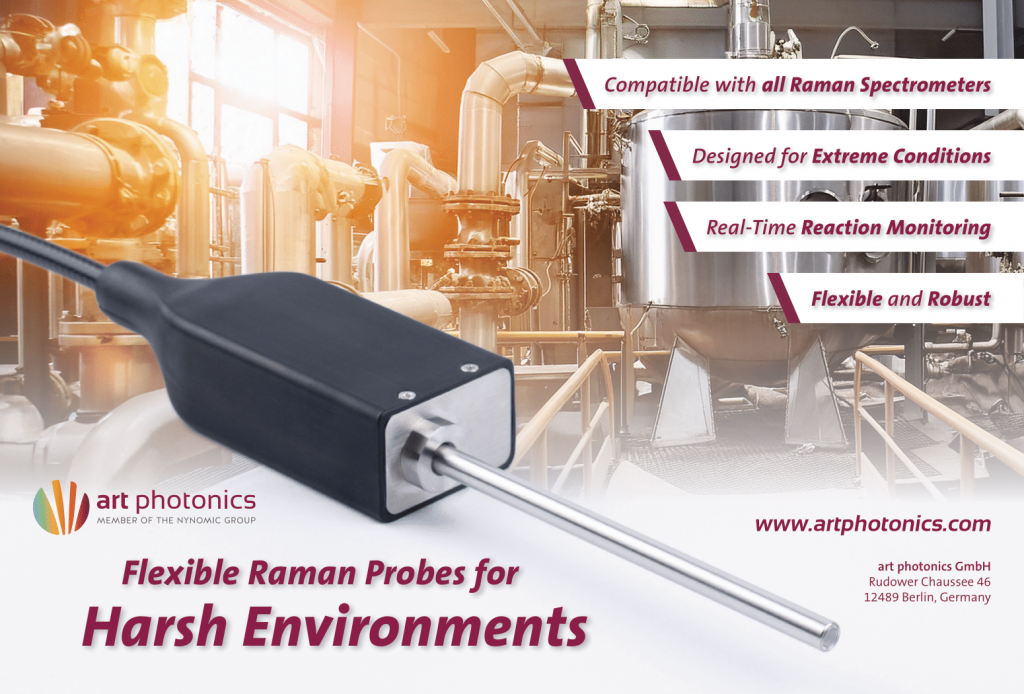
Raman spectroscopy characterizes vibrational levels through inelastic scattering. A monochromatic laser (typically 532 nm, 785 nm, or 1064 nm) irradiates the sample, and scattered photons undergo a detectable energy shift (the Raman shift) corresponding to a vibrational frequency. A vibration is Raman-active only if it alters the molecule's polarizability.
This fundamental difference means symmetric and non-polar bonds - such as C=C, S-S, and aromatic rings - that are weak or silent in mid-IR yield sharp, high-intensity Raman peaks.
Technical Parameters & System Integration:
Aqueous Media: Raman's primary advantage in process monitoring is its exceptionally weak water scattering cross-section, making it the superior architecture for monitoring aqueous solutions.
Signal Optimization & Wavelength Dependency: The Raman scattering cross-section scales as λ/4. Excitation at 532 nm yields higher signal strength and spatial resolution but heavily increases fluorescence interference. Shifting to 785 nm or 1064 nm suppresses background fluorescence at the expense of absolute signal intensity.
Optical Constraints: Probe length is strictly limited by free-space beam divergence; for a standard 12 mm outer diameter probe, lengths exceeding 200-300 cm are optically challenging.
Fiber Transmission: Because the signals exist in the visible/NIR spectrum, low-loss silica fibers can be utilized, allowing for cable lengths spanning tens of meters from probe to spectrometer.
Spectral Range: Standard fiber-optic Raman probes cover 130-4000 cm⁻¹, with specialized configurations achieving measurements down to 25 cm⁻¹ (THz Raman) - accessing low-frequency modes that mid-IR fiber systems physically cannot reach.
Sample Limitations: The focused laser introduces thermal risks, potentially causing photodegradation or burning in dark, highly absorbing samples. Scattering losses from bubbles or suspended particles also constrain the signal-to-noise ratio.
Complementary Solution Architecture
Mid-IR ATR and Raman fiber-optic spectroscopies operate as complementary, not competing, techniques. Deploying both ATR and Raman probes in parallel within a unified process analytical framework ensures that polar, non-polar, aqueous, and solid-phase parameters are captured entirely, preventing the diagnostic blind spots inherent to relying on a single modality.
Learn more about optimizing fiber-optic system architecture for your specific application at artphotonics.com.
You are currently viewing a placeholder content from Turnstile. To access the actual content, click the button below. Please note that doing so will share data with third-party providers.