FlexiSpec®

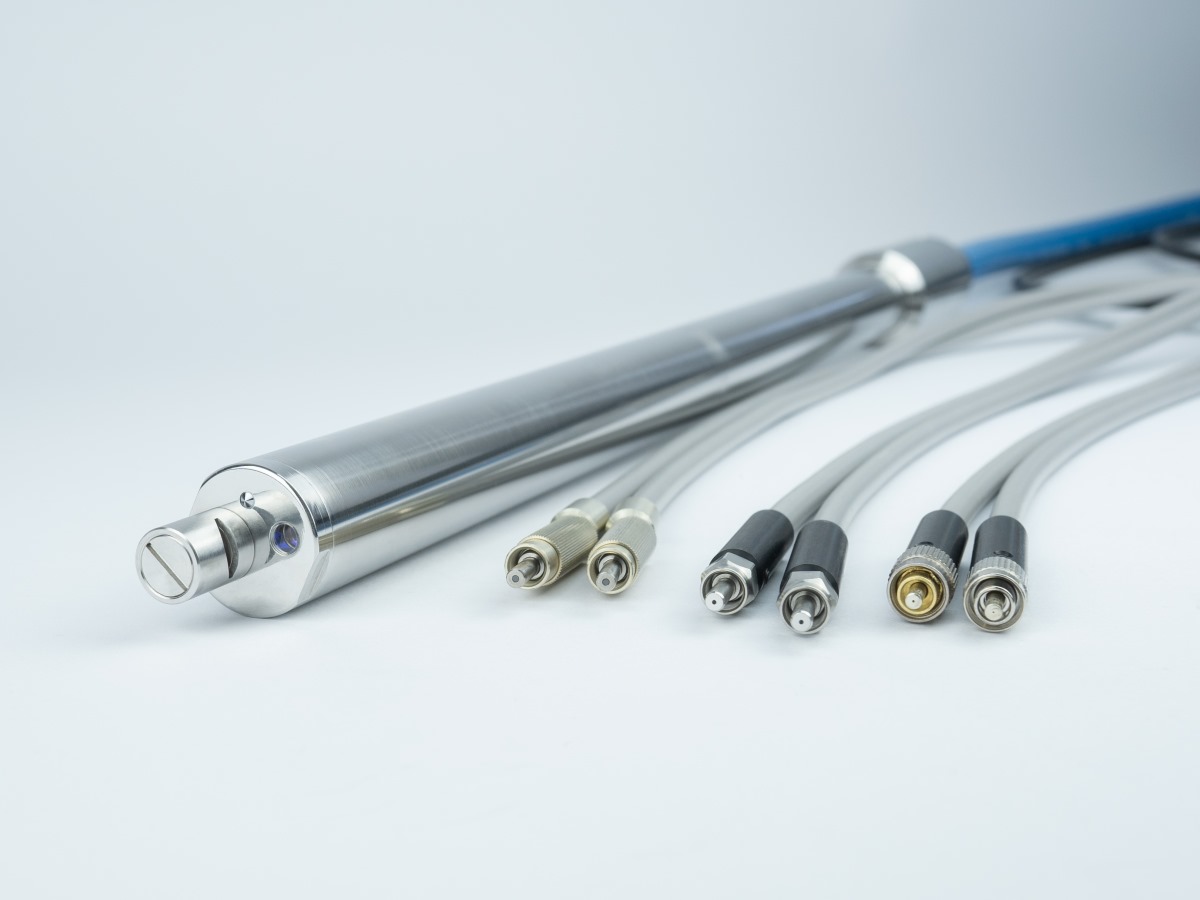
Spectroscopy Fiber Probes & Probe Couplers

FlexiRay®

Fibers | Cables | Bundles | Accessories

FlexiService

Loan & Installation | Measurements Training | Repair | Development
News
Latest News
17 December 2025
Application Note: Monitoring Ethanol Evaporation in Mulled Wine using Fiber-Based MIR Spectroscopy

Believe it or not, Christmas 2025 is fast approaching. For many, the holiday season is synonymous with traditional markets and the comfort of a hot cup of mulled wine. However, there is a genuine scientific reason why you should never let your Glühwein boil, and it goes beyond simple culinary advice. In our latest Application […]

Read more
13 November 2025
Technical Note: Choosing the Right Optical Fiber for Your Process Spectrometer

Is your process spectrometer giving you the full picture? For engineers working in process control and Process Analytical Technology (PAT), the quality and reliability of real-time data are paramount. While the spectrometer itself is the core of the system, its performance often hinges on a component that can be easily overlooked: the optical fiber. The […]

Read more
Latest Events
5 December 2025
Meet Us at the 20. Herbstkolloquium Prozessanalytik

The art photonics team is currently fully engaged at the 20. Herbstkolloquium Prozessanalytik, and with two days already behind us, we are thrilled with the productive atmosphere and the depth of the technical exchanges. The event kicked off with strong momentum, setting the stage for deep discussions on the future of process control. We were […]

Read more
25 November 2025
Webinar: Combi Probes - Solving the "Blind Spot" of Single-Mode Spectroscopy

In complex chemical analysis and biomedical diagnostics, relying on a single spectroscopic technique often results in a "blind spot." While Near-Infrared (NIR) offers speed, it frequently lacks specificity. Raman spectroscopy provides a precise molecular fingerprint but often battles fluorescence interference. Mid-IR offers excellent structural detail but is limited by shallow penetration depths. The Challenge: Spatial […]

Read more
About Our Company
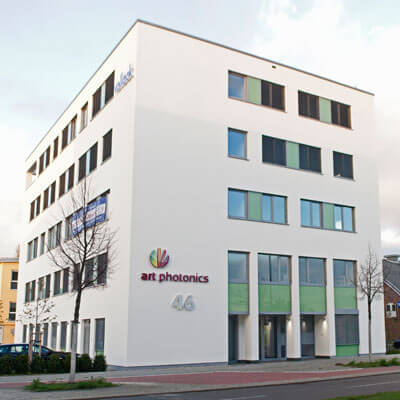
art photonics GmbH, founded in Berlin in September 1998, is one of the worldwide leaders in development and production of specialty fiber products for a broad spectrum from 300 nm to 16 µm. Unique technologies of Polycrystalline Mid InfraRed (PIR-) fibers and Metal coated Silica fibers are used for assembly of various spectroscopy probes for medical diagnostics and industrial process control, in volume production of fiber for medical and industrial lasers, for different fiber bundles, etc. Since January 2024 art photonics GmbH is a member of NYNOMIC GROUP.

Member Of:

Application Note: Monitoring Ethanol Evaporation in Mulled Wine using Fiber-Based MIR Spectroscopy

Posted on: 
17 December 2025

Believe it or not, Christmas 2025 is fast approaching. For many, the holiday season is synonymous with traditional markets and the comfort of a hot cup of mulled wine. However, there is a genuine scientific reason why you should never let your Glühwein boil, and it goes beyond simple culinary advice.

In our latest Application Note, we decided to take a festive approach to Process Analytics. Using our fiber-based MIR spectroscopy probes , we conducted an experiment to observe exactly what happens chemically when mulled wine is heated, providing a clear visual representation of why temperature control is critical.

The Secret to the Perfect Cup

Our experiment highlighted two distinct outcomes based on temperature regulation:

1. The Sweet Spot (72°C – 73°C) This is not an arbitrary range. According to gastronomy rules, the optimal drinking temperature for mulled wine sits between 72°C and 73°C. At this specific thermal point, the aromas develop most effectively, yet the liquid remains just below the boiling point of ethanol. This ensures the flavor profile is maximized without losing the alcohol content that defines the beverage.

2. The Overheated Result (90°C) To demonstrate the risks of overheating, we pushed the temperature of the sample up to 90°C and maintained it for approximately two hours. Continuous monitoring with our Diamond ATR fiber optic probe revealed that the characteristic spectral peaks of ethanol completely vanished. By the end of the experiment, the spectral signature of the "wine" had transformed to resemble that of simple grape juice, dominated entirely by sugar compounds rather than alcohol.

Real-Time Monitoring in Action

While this serves as a lighthearted seasonal example, it perfectly demonstrates the serious capabilities of fiber-coupled MIR spectroscopy. The ability to monitor thermally induced chemical changes in real-time is a powerful tool for process control.

Whether ensuring the quality of a holiday beverage or managing critical parameters in pharmaceutical and bio-fermentation processes, our Diamond ATR fiber optic probes provide the necessary in situ analysis to maintain product integrity.

We invite you to read the full details of this experiment and view the resulting spectral data in our new Application Note.

Download the Application Note below:

crossarrow-right
linkedin facebook pinterest youtube rss twitter instagram facebook-blank rss-blank linkedin-blank pinterest youtube twitter instagram
Copy link
Powered by Social Snap