The optimal choice of a spectral reference is important for building accurate calibration models. In our latest publication of Application Notes, art photonics explores the practical differences between using air and water as references in the quantitative analysis of liquid solutions.
NIR-spectroscopy is widely used for quantitative analysis of solid and liquid samples. When measuring liquid solutions in transmission or transflection geometry using a fiber optic probe, air and water (or another solvent) are the two commonly used reference samples. Both substances are widely available and reproducible in terms of their spectral properties.
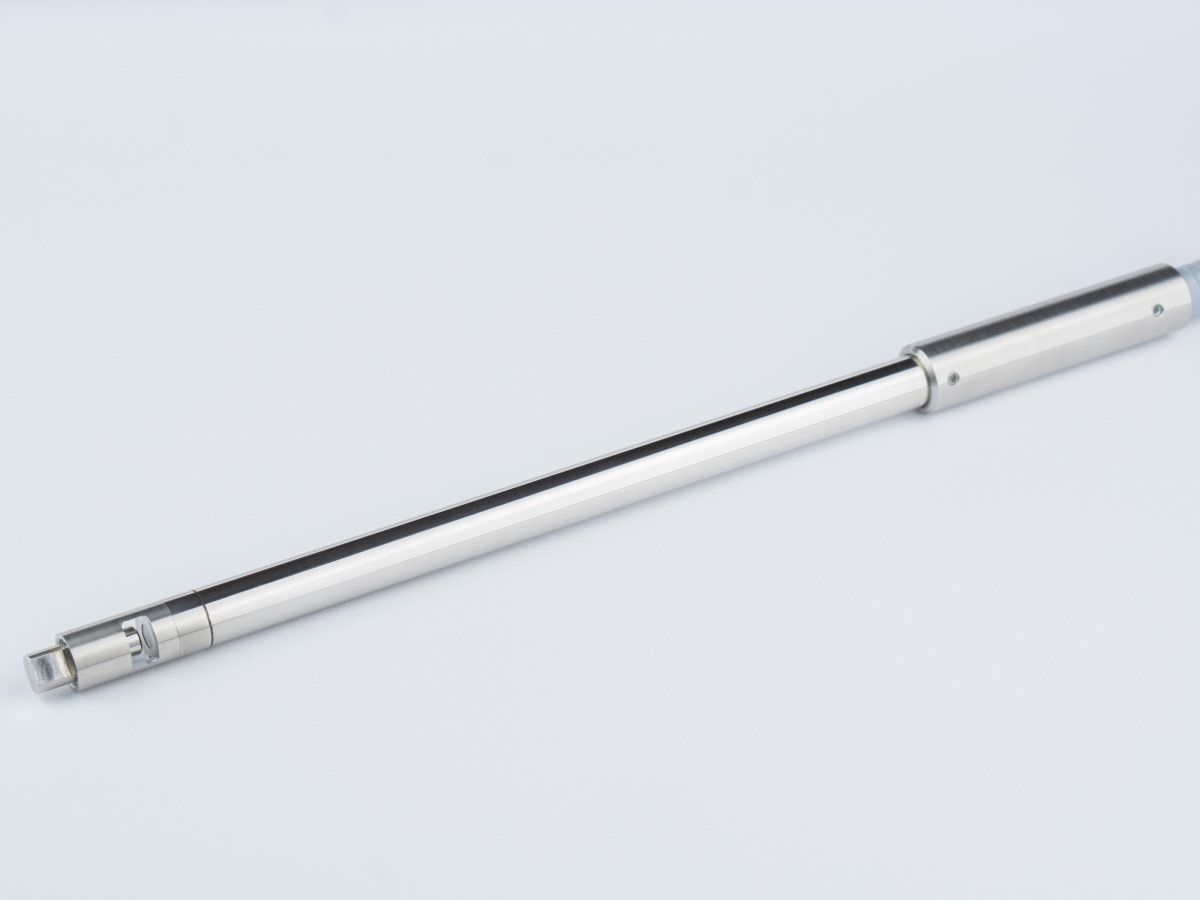
To determine how each reference impacts calibration models, we conducted an experimental study using a designed set of 25 samples of a ternary aqueous mixture of ethanol and methanol. Measurements were performed in the 930-1720 nm range using an art photonics Transflection Fiber Probe coupled with a Broadcom Qneo spectrometer.
Key Findings from the Study
- The Air Reference Workflow: Air can be preferred as a reference for its experimental simplicity. However, raw spectra are dominated by the strong signal of water. To build reliable partial least-squares (PLS) regression models, the data typically requires preprocessing - such as first or second derivatives by the Savitzky-Golay algorithm - to emphasize the vibration overtones of the alcohols.
- The Water Reference Workflow: When water is used as a reference sample, the resulting spectra tend to be strongly distorted due to the presence of negative peaks (in place of the water signals). Although this makes the spectra less interpretable, their information content remains high, and their suitability for quantitative analysis is not impaired.
- Impact on Data Analysis: Using the water sample spectrum as a reference measurement enables accurate prediction of the two alcohols under study without data preprocessing and with a lower number of latent variables. This results in a simpler, and hence, more reliable calibration model.
Conclusion
Both air and water can be successfully used for reference analysis in the analysis of aqueous solutions. While air offers experimental simplicity, using water as a reference simplifies data analysis by avoiding the spectral preprocessing step, which is required for air-based measurements.
Read the full methodology, view the raw and preprocessed spectra, and analyze the cross-validation statistics.