Der Campus Adlershof zählt zu den erfolgreichsten Technologieparks des Landes. Das hat Gründe. Allen voran findige Unternehmer mit Mut, hoher Motivation und Risikobereitschaft. Wir wollten wissen: Was treibt sie an? Welchen Zielen folgen sie? Wie ziehen sie ihre Mannschaft mit?
Nie stehenbleiben, Technologie vorantreiben, vorne mitspielen. Das treibt Kurt Winter an. Winter ist seit April Geschäftsführer der IQ Wireless GmbH, die hochleistungsfähige Funklösungen für die Luft- und Raumfahrt anbietet. Mit „FireWatch“ hat die Firma ein vielbeachtetes optisches System zur automatisierten Waldbrand-Früherkennung entwickelt. Feine, spezielle Technik am Puls der Zeit. So ganz nach Winters Geschmack.
Der Österreicher hat bereits früh sein erstes Unternehmen gegründet. So ging es weiter. Er pendelt zwischen Adlershof und dem heimatlichen Gleisdorf, wo er seit gut 20 Jahren eine Softwarefirma betreibt, die unter anderem Verkehrsmanagementsysteme entwickelt. Er weiß: Ohne motivierte Mitarbeiter, die für ihre Aufgabe brennen, lässt sich keine Firma lange am Markt halten. „Wesentlich ist, dass jeder Einzelne Verantwortung spürt, das macht, was er gut kann, und Spaß an seiner Aufgabe hat“, umreißt Winter, worauf es ihm ankommt. „Wenn es gelingt, bei sich und anderen die Freude an der Arbeit zu erhalten, dann gelingt alles“, ist sein Credo.
Daher gibt es bei IQ Wireless auch keine strengen Hierarchien und Weisungen von oben. Die Projektteams stellen sich je nach Auftrag immer wieder neu zusammen. Jedem Teammitglied ist klar, was es zum Gelingen beizutragen hat. Hilfreich dabei ist natürlich eine überschaubare Unternehmensgröße. Die 30-Mitarbeiter-Mannschaft von IQ Wireless ist für Winter ideal: „Da kann man noch ordentlich miteinander reden.“ Und genau das tat der Österreicher als erstes, als er nach Adlershof kam: Über zwei Monate hinweg nahm er sich die Zeit, mit jedem Mitarbeiter mindestens eine Stunde zu sprechen: „Das hat mir, und ich denke auch den Mitarbeitern, gutgetan. So entsteht eine gute Vertrauensbasis“, weiß Winter. Diese wird auch gepflegt: Wie es seit Jahren bei dem Hightechunternehmen Sitte ist, trifft man sich hier immer donnerstags nach Dienstschluss in der Kaffeeküche. Dort kann jeder zwanglos darüber sprechen, was ihm auf den Nägeln brennt. Winter liebt nicht nur Hightech, sondern auch den Plausch. Ein guter Unternehmer darf kein menschenscheuer sein. Das klingt bei ihm im Gespräch immer wieder durch wie auch seine Devise: Gestalten statt Verwalten. Wovon die Firma am meisten profitieren wird, ist wahrscheinlich Winters starker innerer Antrieb: „Ich bin für mein Leben gern Unternehmer“, betont er.
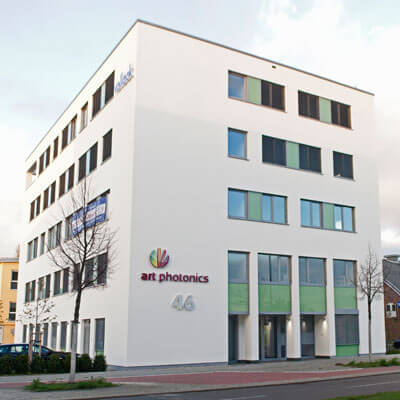
Auch Viacheslav Artyushenko, Gründer und Chef der art photonics GmbH, kann sich kaum einen besseren Job als seinen vorstellen: Seit 1998 entwickelt und fertigt das 30-köpfige Team Lichtwellenleiter für die Forschung, Industrie und Medizin. Zu den Kunden zählen auch die Europäische Weltraumorganisation (ESA), die Bayer AG, BASF SE und der Laserhersteller Coherent, Inc. Physiker Artyushenko gilt als Pionier der polykristallinen mittleren Infrarot-Fiberoptik von 1980, begann in Moskau eine Wissenschaftlerkarriere, sah das sowjetische System zerbröseln, war gleich 1990 Mitgründer eines russisch- amerikanisch-deutschen Joint Venture und startete acht Jahre später mit seiner eigenen Firma in Adlershof durch. „Ich wollte, dass meine Ideen etwas bewegen, aus ihnen Produkte werden. Etwa in der Medizin, um Krebs zu bekämpfen“, sagt der 65-Jährige. „Das treibt mich bis heute an.“ Das gilt auch für seine Mitarbeiter. Herausfordernde, sinnstiftende Aufgaben seien es, die sie motivierten. Das ist der Kern. Hinzukommen kleine Teams, eine familiäre Arbeitsatmosphäre, flexible Arbeitszeiten und gemeinsame Events, wie Grillfeste, Ausflüge und natürlich Geburtstage, die gefeiert werden. „Die Arbeit soll Freude bereiten und mit der Familie vereinbar sein“, betont der Chef. Wichtig sei auch der ständige Austausch untereinander – nur so gedeihen neue Ideen und bleibt die gute Atmosphäre in der Firma erhalten. Überdies locken konkrete Aufstiegsmöglichkeiten und Boni. Aber, das betont Artyushenko immer wieder: Geld ist nicht alles.
Das deckt sich mit Antworten der Adlershofer Jahresumfrage 2018. Gefragt nach der „Motivation unternehmerischen Handelns“ sind die Top 3: Erfolg und Ansehen, soziale Motive wie Arbeitsplätze schaffen und für gesellschaftlichen Fortschritt sorgen, sowie Ideen verwirklichen und Zukunft gestalten. Man sieht: Für unternehmerische Verwalter ist Adlershof der falsche Ort.
Von Chris Löwer für Adlershof Journal
You are welcome to visit the website of Adlershof Journal and read about us: https://www.adlershof.de/news/gestalten-statt-verwalten/
Here you can download pdf-file with the original text of the article:
Evaluation of spectral characteristics of biological tissues is important in medicine for the diagnosis of different pathologies and monitoring quality of treatment. It is well known, that the optical properties of biological tissues are determined by the quantitative composition of the main endogenous chromophores, such a melanin, hemoglobin, water and collagen and changes in these chromophores indicates the occurrence of various pathological processes.
At the end of 2017 our Project MIRACLE was funded by program Horizon-2020 by the team of 13 partners. art photonics‘ role in joint work will be to develop and provide flexible IR-fibers for QCL coupling with the distal end of arthroscopic probe.
artphotonics is the worldwide leader in Polycrystalline fiber technology for 4-16µm range and is the single OEM partner in MIRACLE consortium providing the flexible Mid IR-fibers for this promising project success.
MIRACLE (Mid-infrared arthroscopy innovative imaging system for real-time clinical in depth examination and diagnosis of degenerative joint diseases) will take towards commercialization the first mid-infrared (MIR) arthroscopy probe for in-depth evaluation of articular cartilage enabling early diagnosis of degenerative joint diseases such as osteoarthritis. This will be achieved combining three novel photonics components:
- a quantum cascade laser array tailored to biodiagnostics,
- an on-chip beam combiner for efficient radiation coupling, and
- MIR sensing probe for imaging.
The MIRACLE project joins 13 European partners from 6 countries, including research, industrial and medical partners: University of Oulu, Ulm University, University of Eastern Finland, Norwegian University of Life Sciences, Kuopio University Hospital, Utrecht University, nanoplus Nanosystems and Technologies GmbH, OptoPrecision, art photonics GmbH, Innovacio Recerca Industrial Sostenible SL, Instituto Nacional de Engenharia Biomédica, Asociación Española de Normalización, Photonics Finland.
art photonics is focusing on development of innovative MIR imaging-probe.
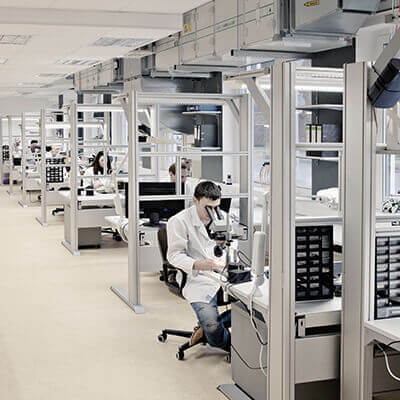
On June 19th, the “Education-Alliance-Adlershof” organized guides for students in innovative companies throughout Adlershof, Berlin. art photonics GmbH was part of the program for the first time and the two groups of students from schools all over Adlershof were guided through all areas of the company – from sales and logistics to production and quality control. The students had a chance to ask all kinds of questions and therefore gather a lot of information that they can’t obtain in high school. Though, of course, not every student was highly motivated, all of them enjoyed the insight into the companys workflow and some even showed special interest in certain areas.
The event is supposed to be a help for the students to make a career dicision, which is very difficult nowadays, considering how many excellent option are available. art photonics managed to represent a succesful company, with concrete aims and splendid work atmosphere.
Thermal injury is the most important mechanism of lesion formation during radiofrequency catheter ablation procedures. Irreversible tissue injury requires heating to approximately 50 °C. Temperatures above 100 °C result in coagulum formation. As temperature plays a major role during radiofrequency catheter ablation procedures, temperature monitoring has been recommended as a tool to help catheter ablation procedures. The results of recent clinical studies show that electrode temperatures do not vary at successful and failed ablation sites; electrode temperature does not predict or remove the possibility of arrhythmia recurrence [1].
Development of innovative fibers for mid-IR spectral range paves way for a number of promising fiber applications ranging from 2 to 18 µm. Many years of art photonics’ research and development for reliable IR-fiber technologies resulted in the final selection of the main IR-materials suitable for production of mid IR-fibers of optical performance acceptable for pragmatic applications.
https://www.azom.com/article.aspx?ArticleID=14353
To develop an online probe that is not only sufficiently robust, but also able to measure crucial process variables in biogas plants is a tough challenge. Therefore, a mid-infrared (MIR) spectroscopic attenuated total reflection (ATR) probe and robust probe fitting were established. A fully automated probe control, calibration after probe cleaning, and analysis of the absorption spectra using machine learning were implemented in order to reduce maintenance of the probe to a minimum. The relevant wavelengths in the MIR spectrum for organic acids, total alkalinity, and ammonium nitrogen concentration were identified. Finally, intensive lab testing was carried out, followed by operation of the complete online measurement system at an industrial biogas plant. In order to improve signal strength and sensitivity, microelectronic mechanical system (MEMS)-based Fabry-Pérot interferometers were also investigated.
https://onlinelibrary.wiley.com/doi/full/10.1002/ceat.201500334